



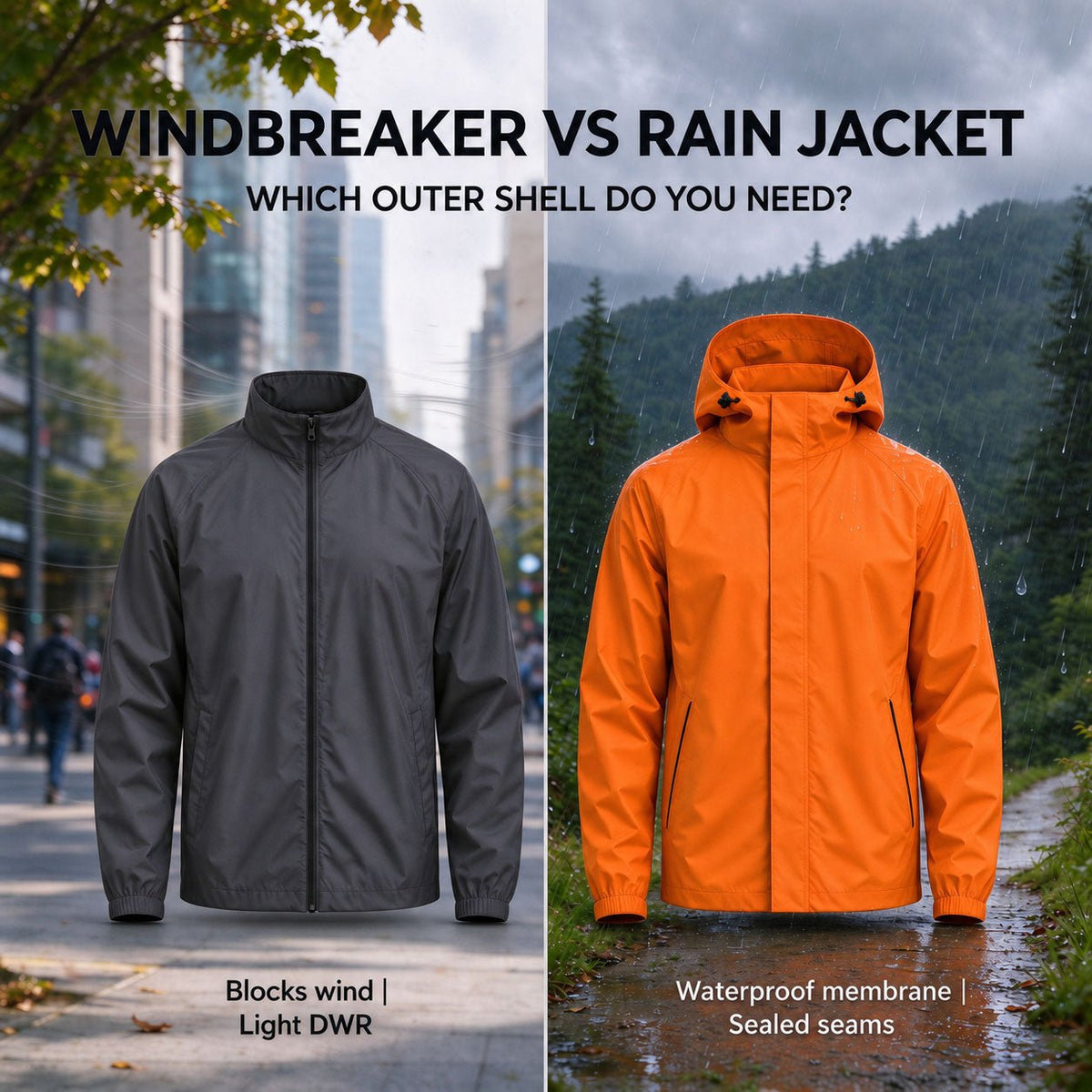
Understanding outdoor shell jackets can be tricky. This article uses standard textile industry knowledge to break down how windbreakers and rain jackets work. Keep in mind that fabric performance will change over time, affected by regular wear, washing, and different weather you encounter.
Many shoppers mix up windbreakers and rain jackets. They look alike: thin outer layers, many versions come with a hood. But they are built for very different real‑world weather challenges.
A windbreaker’s primary job is stopping wind chill. A rain jacket focuses on keeping you dry during rain or wet snow. Even though a quality rain jacket can block wind too, it brings noticeable trade‑offs for dry, windy days. Understanding these differences helps you pick wisely for commuting, travel or day‑hiking.
Core functional differences
| Item | Windbreaker | Rain Jacket |
| Main purpose | Block wind chill; handle very brief light mist | Defend against ongoing rain and wet snow |
| Water performance | Relies on DWR finish. Works for short‑lived drizzle; likely to fail in steady rain. DWR wear‑off also weakens wind‑blocking ability. | Waterproof shell construction. For full background on waterproof ratings read our guide: What Is a Good Waterproof Rating for Jackets? 5000mm vs 10000mm Guide |
| Breath & feel | Very breathable, easy to pack. Minimal extra fabric layers. | Provides solid breathability, but generally less than a dedicated windbreaker. May feel clammy during fast movement with no rain. |
| Key construction points | Adjustable cuffs and hem; usually no sealed seams. | Seam taping quality; hood fit; zipper storm‑flap; adjustable cuffs and hem. |

Important real-world note: When DWR becomes less effective, the outer fabric may absorb water instead of shedding it. On a rain jacket, this does not automatically mean the waterproof barrier is leaking. DWR loss alone also does not mean a windbreaker has lost its wind resistance. Follow the garment’s care label when water stops beading on the surface.
Pick for your real‑world situation
1. Dry and windy city commutes
A true windbreaker would be well‑suited here. It stays breathable when you walk or cycle, and folds small inside a daily bag.
If you only have a rain jacket on hand: it can block wind, but expect more trapped sweat during active movement on dry days. It can work, yet it is not an optimal solution for this specific scenario.
2. Changeable‑weather travel
If you can pack two shells: windbreaker for dry gusty days, rain jacket for showers.
Many shoppers only have space or budget for one piece. For unpredictable spring‑autumn travel with risk of sudden rain, a rain jacket may be the safer choice. Be aware you may feel clammy on dry, windy hiking segments.
3. Day‑hikes with possible steady rain
A rain jacket is recommended for these conditions.
Even strong wind alone cannot replace rain protection. A windbreaker can handle dry‑wind hiking well, but is unlikely to stand hours of falling rain or wet snow.

Can one jacket do both jobs?
Few single outer‑shell designs perform equally well for both continuous rain and dry windy conditions.
A quality rain‑jacket blocks wind effectively. But its waterproof membrane and sealed seams reduce air flow. When you hike fast without rain, sweat builds inside, and you may end up damp from perspiration instead of rain.
A windbreaker handles dry‑wind conditions excellently, yet its unsealed seams and lighter fabric cannot hold back steady rain, even with DWR treatment. Short mist is manageable; sustained rain will likely soak through.
For many buyers, you do not need to own both garments. Make your choice based on which type of weather you encounter most frequently.

Our men’s lightweight waterproof rain jacket delivers solid waterproof performance combined with good breathability. It can handle many mixed‑weather scenarios. Even so, it still follows the general shell trade‑offs: during high‑activity dry‑and‑windy conditions, it cannot match the high breathability of a purpose‑built windbreaker. Real‑world performance will still depend on fit, wear and maintenance.
Frequently Asked Questions
Q: Is a windbreaker fully waterproof?
A: Most windbreakers are not fully waterproof. Most have a DWR coating, which only works for light mist and short showers. This coating wears off over time with washing and rubbing. It will not keep you dry in steady, heavy rain.
Q: Does a rain jacket keep me warm?
A: A rain jacket is only an outer shell. It blocks wind and rain, but it adds very little warmth. If you wear it in cold weather, you still need a base layer or mid layer underneath.
Q: If my jacket has a hood, is it ready for heavy rain?
A: A hood is just one feature. Real rain‑protection comes from fabric rating, seam taping and storm‑flap zippers. A hood alone cannot stop water from leaking inside. Refer to our waterproof‑rating article for construction details.
Final thought
Ask yourself: Do I face rain most often, or mostly dry wind?
If sudden or ongoing rain is your main concern, our men’s lightweight waterproof rain jacket offers outer‑shell features built for travel and day‑hikes. Note that real‑world performance will still depend on fit, wear and maintenance.


Leave a comment
This site is protected by hCaptcha and the hCaptcha Privacy Policy and Terms of Service apply.